Before the Words,
there’s a Feeling.
Attune is a space to pause, notice your body, and give what you feel a form. It’s for people who want to make sense of their inner experience, even when they don’t quite have the words.

One idea,
three iterations.
Attune began with a question: how can recording an inner experience feel easier? Across three iterations, I designed, tested, gathered feedback, and used what I learned to shape the next version.
EARLY EXPLORATION
A year on paper.
A first digital translation.
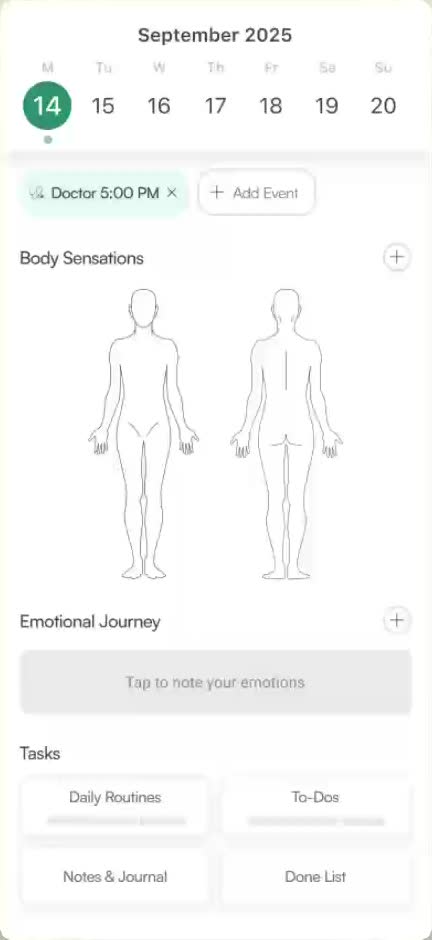
For over a year, I used color, body drawings, journaling, and lists to reflect on my inner experience. The first Attune prototype brought that personal practice onto a screen.
The emotion bar, body map, journal, done list, routines, onboarding, and goal-setting all translated the structure of my paper practice into a digital experience.
Interviews, prototype testing, and a simplified pen-and-paper test challenged that approach. What I enjoyed as a personal ritual could feel like homework to others: a long setup, too many tools, and more forms to fill in. Recording the parts did not make the connection between them clear.
I needed to translate the purpose of the practice, not every step. That meant narrowing the scope, making recording lighter, and helping people see connections across body sensations, emotions, thoughts, and actions.
TESTFLIGHT BETA
Less to fill in.
More to understand.
The beta offered more flexible ways to begin. I built a native iOS app and tested it with users through TestFlight.
A new landing page let people speak, write, or log a body sensation, emotion, thought, or action, without completing every category.
Body sensations, emotions, thoughts, and actions shared a body motif, color, and geometric forms. This visual language connected individual entries with the broader view in Patterns, shown in the video.
Paper testers asked: could their entries help them understand their inner experience?
That led to Patterns and AI reflections. I designed them to surface changes and tentative connections grounded in entries, without diagnosing or inventing causes. Interpretation stayed with the person.
Logging supported noticing; Patterns supported understanding. Both were valuable, but their combined demands obscured the body–mind connection at the heart of the practice.
I returned to my own practice: regularly noticing body sensations and emotions, then recognizing connections over time. The next version prioritized manageable noticing and recording before expanding Patterns.
CURRENT PROTOTYPE
Body and mind.
One place to notice.
I brought body sensations, emotions, thoughts, and actions onto one body map, making the body–mind connection part of the interaction from the start.
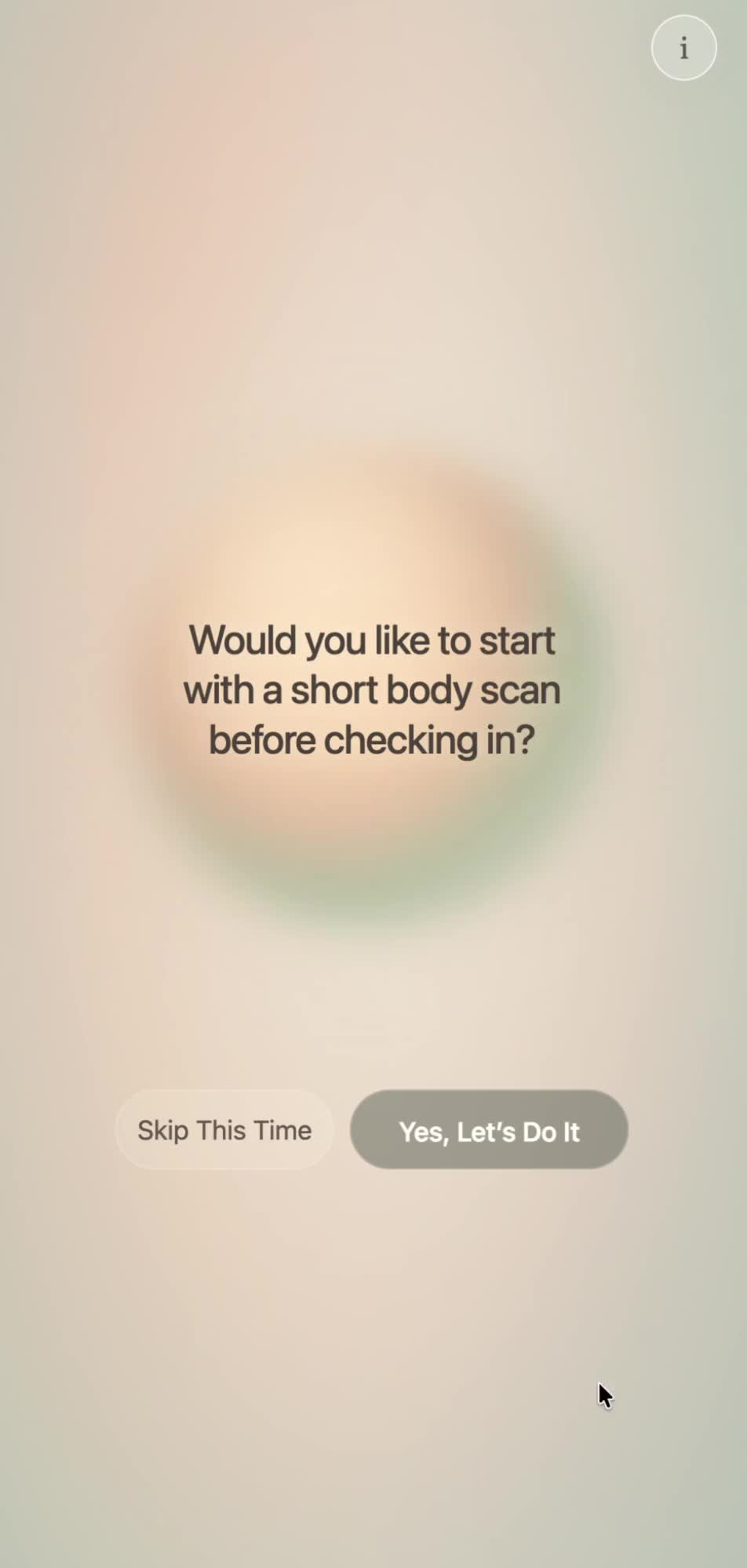
01 Begin with a body scan, or go straight to what you notice.
02 Tap on or around the body. Give what you feel a color, pattern, or emoji, and add words if you want.
03 Each addition becomes part of today’s view: a changing picture of what you’ve noticed, in colors and patterns on and around the body.
The practice and its result share the same space.
Notice something. Give it a form. See it there.
Opens in a new tab
Next steps: complete the prototype, build it in Xcode, then test with users.